
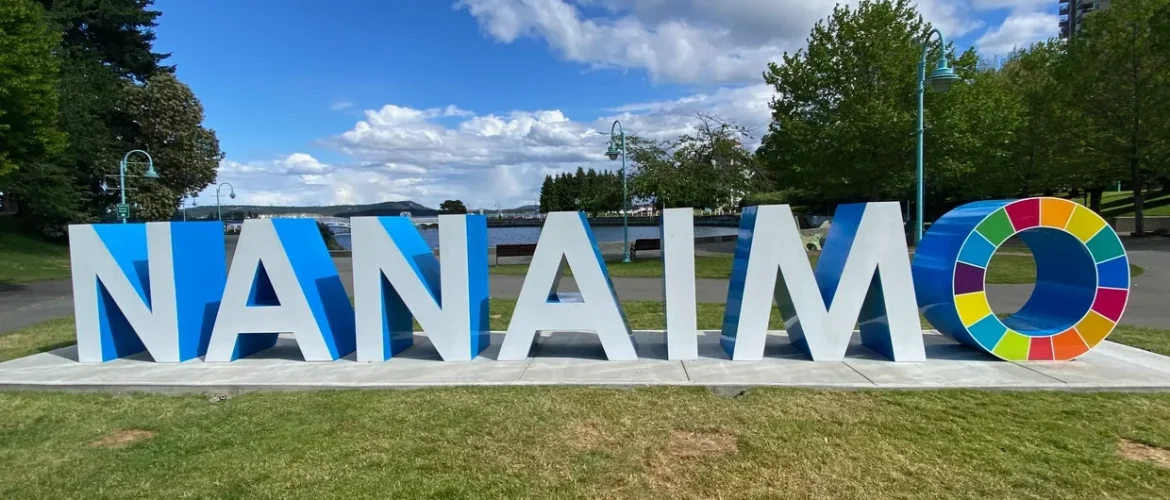
The Vancouver Island University World Leisure Centre of Excellence (VIU WLCE) is proud to have hosted the 2026 Canadian Congress on Leisure Research (CCLR) in Nanaimo, British Columbia. The congress brought together 132 scholars and students, including a significant number of graduate students. Participants included 52 students and 2 volunteers, 72 scholars and 3 volunteers, along with 3 additional VIU volunteers.
The event featured the Walk With Me pre-conference session, attended by 22 participants, and welcomed many WLO colleagues including Joanne Schroeder (WLO Chair) and Coen van Bendegom (WLO Board member), and WLCE representatives Marc-André Lavigne (UQTR) and Rasul Mowatt (North Carolina State University). All attendees received the now-famous Nanaimo Bar Socks.
The congress programme featured plenaries, concurrent sessions, and special events across the Vancouver Island Conference Centre, with full accessibility and inclusive arrangements, including pre-conference workshops and interactive sessions that encouraged participant engagement and applied learning.
Feedback from participants highlighted the exceptional organization and hospitality of VIU: “One of my favorite CCLR so far. And of course, the Nanaimo Bar socks, which I am proudly wearing right now.” Another commented: “The hospitality of VIU was so evident in the care that was taken in planning the conference. I really enjoyed the opening reception and the unique location at the museum. The pre-conference session was excellent.”
From WLO, we have had the opportunity to speak to WLO Board member Coen van Bendegom and WLCE North Carolina State University coordinatorRasul Mowatt and hear their reflections and insights on the congress.
Coen van Bendegom, Mid Sweden University
What challenges and opportunities have you encountered studying leisure in remote vs. on-site contexts?
The main challenge with studying visitors in nature for leisure purposes is measuring 'who is where, when, doing what and why'. These questions are relevant to understand visitor behavior and motivation for nature visitation, and to inform both managers of local recreational green and blue spaces, and for protected areas. It is quite labor intensive to do so through onsite measurements (for example, interviews, surveys and counting stations), so in my research I'm exploring how we can use digital traces of visitors. This remote approach, using data from social media, telecom operators, or sports tracking apps, can support onsite methods - although no single method is perfect!
How can technology enhance the understanding of visitor engagement in leisure settings?
Digital technologies that collect data remotely can enhance understanding of visitor interactions with their environment in diverse leisure settings. A couple of examples of research applications: 1) map visitor movements and identify hotspot areas, 2) follow social media trends and try to respond proactively instead of reactively to visitor pressures, 3) combine datasets to quantify the economic value of (nature) visitation.
What advice would you give emerging researchers interested in applied leisure research?
Don't expect these methods to be the solution to overcome all the limitations of onsite methods. The multitude of definitions for these methods can be confusing, crowdsourced data, user-generated data, volunteered geographic information, digital mobility data, often refer to the use of digital traces to study visitor behavior. There are also important ethical questions to consider, such as who owns the data, who is represented by the data, and who's voices are not heard. A good starting point for scholars interested is the paper by Heikinheimo and colleagues (2020).
Heikinheimo, V., Tenkanen, H., Bergroth, C., Järv, O., Hiippala, T., & Toivonen, T. (2020). Understanding the use of urban green spaces from user-generated geographic information. Landscape and urban planning, 201, 103845.
Rasul Mowatt, Phd, North Carolina State University
How do you see the historical foundations of diversity shaping the future of leisure studies?
Diversity, allegedly, began as an approach to address past wrongs tied to Race within the United States that carried over to Canada (1963 formation of the Royal Commission on Bilingualism and Biculturalism), the United Kingdom (multiculturalism + the Race Relations Act of 1965), and France (the impact of the May 1968 Strikes). For the purposes of the keynote at CCLR, DEI is the catch-all for the phraseology that is the stir of the moment in the United States (US) that steadily drifting to other countries (i.e., EDI, JEDI, DEIJ, DEIB, etc.). DEI was crafted to be a counter to the rebellions and liberation movements of the 1960s and 1970s. And despite DEI’s long historical service to, we are placed into a situation to argue for a front that has little impact on our material conditions, especially over an extended or sustainable period of time.
On the judicial front, the Warren Court deemed that education was a public good paving the way for seeing the decision that would come nearly fifteen years later that DEI in colleges and universities ought to be a compelling interest to government, and this rationale became more crystalized with the subsequent Burger Court and the Regents of the University of California v Bakke 5-2 ruling in 1978. A public good. Universities and colleges scrambled to reap the federal support from being compliant to law and legislation, but these institutions scrambled to perform their duty to influence the minds of future rebels to not rebel. A 1962 Duke University admissions committee report stated,
“We believe that a policy should be established to enable the admissions officers to seek out students from socioeconomic levels not presently very well-represented in the student bodies of the colleges. The sharp minds and determined spirits of such students should help leaven our mass of upper middle-class, suburban, well-to-do groups.”
The National Advisory Commission on Civil Disorders of 1967, aka the Kerner Commission, reported 164 disorders in the first quarter of 1967, alone. The Commission’s sweeping recommendations for increased employment, fair housing, and even expansion of recreational opportunities in “ghettos” went ignored. And yes, there was extension discussions of parks, recreation, and community centers in this commission as solutions to inequity that largely went ignored.
In 1965, President Johnson’s speech to graduates of the historical Black college, Howard University, initiated the term and efforts linked to “affirmative action”, that was followed by an executive order to combat discrimination of race, color, religion, and sex (“The contractor will take affirmative action…”).
In 1969, President Nixon (ironically) further extended “affirmative action” as he believed that “Black militants” were “undercover integrationists who wanted inclusion” (connecting inclusion), as entrepreneurs‑to have a share of the wealth and a piece of the action”, implemented the most robust affirmative action policies via the Revised Philadelphia Plan in 1969 following the assassination of Dr. Martin Luther King a year prior.
But the Regents of the University of California v. Bakke 1978 ruling (against racial quotas) and Justice Powell’s opinion that “diversity that furthers a compelling state interest” within higher education, strengthened existing and fostered new affirmative action programs.
Before and during the Court, Powell held opinions about deradicalizing college campuses (“principal base of revolution”) by diversifying the student body and exposing all to a diverse and “robust exchange of ideas”. This state interest and “the nation’s future” is what guided the early stages of diversity in education that were then adopted into the business sector in the 1980s, and made to be an asset in business globalization in the 1990s (reflected in literature across various fields at the time), thereby transferring the term and concepts beyond the U.S.
Labor, actual labor, never seemed to have been a hallmark of DEI, as racialized workers remain the least likely to be hired and the most likely to be hired thereby contributing to our strong representation in unemployment percentages and rates. And DEI will never likely be a hallmark of any material condition change, especially after Amazon gifted the Congressional Black Caucus with a $1.8 million donation (Target being among other donors that have contributed over $1 million to the Congressional Black Caucus Foundation coffers). Under the 119th United States Congress, with 62 Black legislators, at least, poverty and unemployment has remained consistently diverse.
Cultural competency, implicit bias, microaggressions, and generational trauma are just some of those words that have contributed to a global diversity and inclusion (D&I, no E) market that was expected to reach over $24.4 billion by 2023. In just the United States, D&I was estimated to have earned $9.4 billion.
While leisure, through this long history, has been impacted by the failures of not following the recommendations of the Kerner Commission when it mattered most, laying the groundwork for the inequitable neighborhood recreational opportunities that were studied in the 1980s to 2000s. Leisure based-agencies have been impacted by an industry of DEI consultancy that never succeeded at concretize any material change (better pay and work conditions for frontline workers in hospitality, tourism, entertainment, parks, and events), because that population was never the focus and that type of change was never the intent. Lastly, leisure scholarship has been gravely influenced by the rhetoric and emphasis of DEI on representational changes rather than societal changes in the cities in which people’s lived conditions must be improved.
Which lessons from your keynote could inform leisure practices in diverse communities?
As noted in the keynote, as the field is looking at more radical ways to respond to the current climate, there is an importance to developing some measure of understanding a historical context to the very concept of diversity. This may suggest a need to ground the field in other conceptual avenues (critical leisure, social justice, etc.) that may be more ideal for the collective intent of the field, particularly in response to the current climate in academia and to better prepare for future struggles.
This lends itself to the seminal Sue Shaw (2000) who questioned the trajectory of the field to hold leisure, first, and the issues of society, second:
“However, looking at the published research on these topics, it is evident that the starting point of the analyses used is almost always leisure: that is, the focus in on leisure meanings, activities, constraints, satisfactions, or benefits. This attention to leisure first, and other issues second, may be limiting our vision and the potential application, breath [sic] and social relevance of our research. It may be that if our starting point for research were to shift from leisure and leisure participation to particular pressing social needs, the list of issues that we might address would be different, more extensive, and, I would suggest, more relevant. For example, the list might include such public concerns as crime and violence, poverty, homelessness, child abuse, cuts to social services, consumerism, the destruction of our environment, the loss of community, and the extensiveness of racism, homophobia and misogyny in our society. (p. 149)
In your view, how can leisure spaces actively promote equity and inclusion?
A simple point, or question should drive the foundation of our questions, the basis of our questions, how we question, and why we question. Famed novelist Alice Walker, said, “The most important question in the world is, 'Why is the child crying?'".